Charlotte’s Story
My Lymphoma Story: Living With Incurable Cancer in My 20s
In my early 20s, when most people are travelling, dating and building their careers, I was diagnosed with an incurable cancer.
The Years Before Diagnosis
It began with symptoms that seemed harmless enough: abdominal pain, bloating, exhaustion. But they didn’t go away. For over two years I went back and forth between my GP and A&E. Different medications. Different explanations. The same message every time: I was “too young” for anything serious to be wrong. Eventually I was told it was IBS and sent away, reassured there was nothing to worry about.
But I knew my body. I knew something wasn’t right.
With no clear answers and little concern from doctors, I decided to go travelling, hoping sunshine and adventure might help me feel better. Instead, everything fell apart. I only managed three weeks in Thailand before my stomach became so swollen and painful that I knew something was seriously wrong. I was incredibly unwell, but I had no idea just how serious it was.
When I came home, my condition worsened fast. The pressure and pain in my back became so intense I could barely stand. I was constantly exhausted. And I could actually feel something growing inside me.
That’s when my sister stepped in. She took me back to the doctors, this time to a different surgery.
This time, they listened.
The Diagnosis
In March 2015, I was diagnosed with stage 4, advanced and progressive lymphoma. It was the first time I had ever heard the word lymphoma.
Scans revealed what had been happening inside my body for over two years. A 15cm lymph node in my abdomen, pressing against my spine. Another behind my heart. One in my neck. The cancer had spread to my bone marrow. When they showed me the PET scan, my body lit up with cancer.
Overnight, my life changed. Adventure-filled plans, spontaneous nights out, carefree fun: gone. Replaced with biopsies, fertility treatment and chemotherapy. My treatment wasn’t designed to cure me. It was designed to put the cancer into remission for as long as possible. After six months of chemotherapy and two years of immunotherapy, I reached remission. I was overjoyed. But with incurable cancer, remission doesn’t mean the end. It means uncertainty. I was placed on active monitoring, living scan to scan, knowing the lymphoma could return at any time.
The Relapse
This time, I wasn’t oblivious to my body. I checked myself regularly, feeling for lumps in my neck, armpits and groin. In March 2022, I found one. When it didn’t go away, I went straight to my consultant. A biopsy confirmed my worst fear. The lymphoma had returned. A PET scan showed it had spread through my neck, throat and face.
With incurable cancer, treatment decisions are complex. Doctors have to balance effectiveness with longevity, preserving options for the future. I underwent radiotherapy, hoping it would control the disease. It didn’t. Within weeks, new lymph nodes appeared, and I started an aggressive combination of chemotherapy and immunotherapy.
The treatment was brutal. My body struggled. I caught Covid and was admitted to hospital on Christmas Day with a blood clot. After four months, my consultant made the difficult decision to stop treatment because my body couldn’t tolerate any more. Thankfully, it had done enough. I went back into remission.
Then in May 2025, my lymphoma relapsed again. Ironically, while I was in Thailand, the same place my journey with cancer had first begun.

Where I Am Now
Right now, I’m not in active treatment. I’m on watch and wait, living scan to scan, waiting to see what my body does next. Clinical trials are likely to be my next step. Not as a last resort, but because for patients like me, they’re often the most realistic route to accessing emerging treatments: advanced immunotherapies that didn’t even exist a few years ago. Entering a clinical trial is an act of hope. Trusting science, trusting innovation, trusting the possibility of time. Because that’s what this is about. Time.
I’m here today because of research. Because patients before me said yes to treatments that didn’t yet exist, and helped move science forward.
And this is why early diagnosis matters so much. If my lymphoma had been diagnosed sooner, before it became advanced and incurable, my pathway could have been very different.
Today, I live with incurable cancer. But I also live with hope. Hope in science. Hope in progress. Hope in time.
Because when cancer is incurable, time is everything.
Why I Started Lymphoma Out Loud
But for me, it was never just about surviving it. It became about doing something with it.
Lymphoma is the most common cancer in people under 30, and we can’t stay quiet about that anymore.
Just two months after my diagnosis, fuelled by this need for change, I set up Lymphoma Out Loud. I didn’t want anyone else to go through what I had: years of being dismissed, not knowing what was happening inside my own body.
Statistically, lymphoma was my most likely cancer. But I’d never even heard of it. The first time I heard the word “lymphoma” was when my consultant told me I had incurable cancer. That’s wild.
Why wasn’t anyone shouting about it?
Had I known the signs, maybe I’d have pushed harder with my GP.
Maybe I’d have recognised the changes in my body sooner.
Maybe I wouldn’t be living with incurable cancer today.
Sadly, I’m not alone in that. Misdiagnosis and late diagnosis are alarmingly common.
Everything we do at Lymphoma Out Loud comes back to this: our mission. We exist to make sure young people know their bodies, trust their instincts, and act when something doesn’t feel right.
If something doesn’t feel right in your body, don’t wait years like I did. Check the signs and symptoms, and if you’re worried, read our guide on talking to your GP.
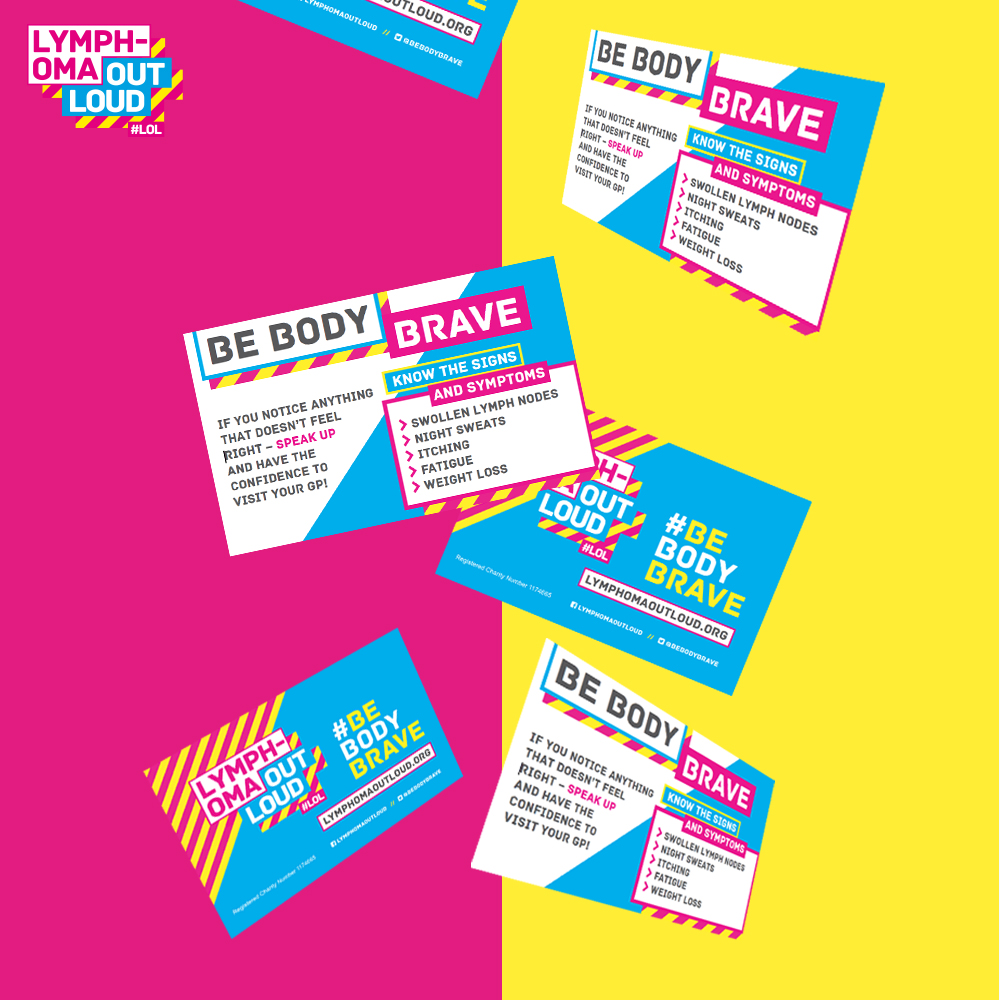
Read More Lymphoma Stories Know Your Nodes Get Your Be Body Brave Pack – It’s Free!